

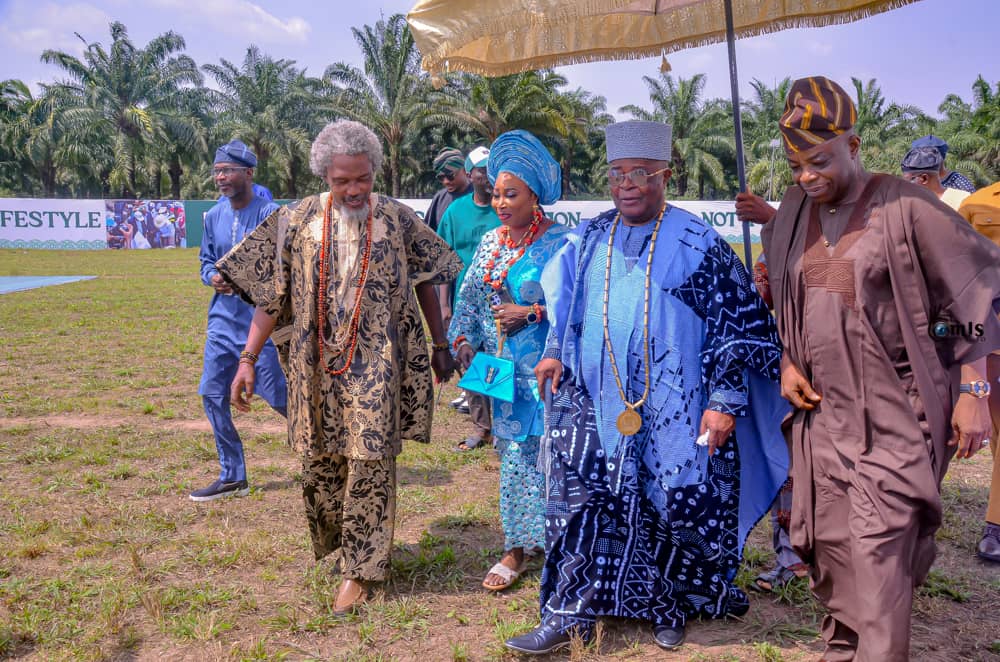
 Abeokuta: Four Kingdoms, One Paramountcy
Abeokuta was founded in 1830 but Owu arrived in 1834, as a refuge under the rock by four distinct peoples, each arriving with its own crown. They federated for mutual defense, but never surrendered their kings. Today that reality is codified in Ogun State law.
Township Oba Status in Law Seat in Abeokuta
Egba Alake -Alake of Egbaland Paramount Ruler of Egbaland. Chairman, Egba Traditional Council Ake
Owu-Olowu of Owu First-class Oba. Member, Egba Traditional Council as Owu, centered at Oke Ago Owu
Oke-Ona -Osile of Oke-Ona First-class Oba. Member, Egba Traditional Council as Oke-Ona
Gbagura -Agura of Gbagura First-class Oba. Member, Egba Traditional Council as Gbagura
How It Works
1. Paramountcy vs. Sovereignty
The Alake is the Paramount Ruler of Egbaland and permanent Chairman of the Egba Traditional Council. That is statutory. For Egba-wide issues — government relations, security, festivals like Lisabi Day — the Alake presides and speaks for Egbaland.
But each Oba is sovereign in his township. The Olowu does not take instruction from the Alake on Owu custom and tradition, Owu land, or Owu chieftaincy. The Alake cannot install or remove an Olowu. Same for Osile and Agura. Think: four states in a federation with one recognised federal chairman.
2. Owu Chieftaincy Line of Authority
Within Owu, power flows through Ajibosin’s structure:
Baales / Alakoso → Iwarefa → Olowu of Owu → Egba Traditional Council
Chief Abiodun Lasile, Orunto Baalufe, therefore reports through the Olowu to the Council if need be, taking the structure of communication. He is not under an Alake chief. His duty is to go to Owu first, Egbaland second, if it’s necessarily compulsory.
3. Checks and Balance Still Live in Owu
– Iwarefa: Six kingmakers. They stand at the back of the Olowu to “ward off attack from the rear.” They install, counsel, and restrain. Law behind the throne.
– Ologun: Warrior titles. They stand in front of the Olowu. Courage before the throne.
– Baales: Village heads who graduate to coronet Oba when their area develops. Authority follows responsibility.
– Alakoso: Township heads in urban quarters. Governance at street level.
This is why Chief Lasile’s words hit: _rigour of principle, not accident of birth._ Owu’s crown was given with law attached from day one.
4. Where Conflict Hurts:
When there comes any disagreement maybe by abuse of power between kingship through governance, peace is going to be disturbed and people’s suffering will increase.
If the paramountcy is used to override Owu’s internal sovereignty, or if any Oba contests the Alake’s statutory chairmanship, the confederacy frays. Farmers, traders, and families pay first. Owu Ipole fell once. Abeokuta holds because each crown remembers its boundary and its brotherhood.
Owu Kingdom is in Egbaland, not under Egba Alake: It is a first-class kingdom within a paramountcy. The Olowu rules Owu Kingdom. The Alake chairs Egbaland. The Iwarefa guard the king, the Ologun guard the people, and chiefs like Orunto Baalufe hold the civic line.
That is why _“a traditional Chief must regal himself in honour and dignity at all times.”_ Because when crowns quarrel, compounds bleed.
_Iṣẹ Owu. Iṣẹ Ìwà._
-Chief Abiodun Oladimeji Lasile DL MnbR
Orunto Owu Kingdom Abeokuta
(Kingmaker and Iwarefa)

