

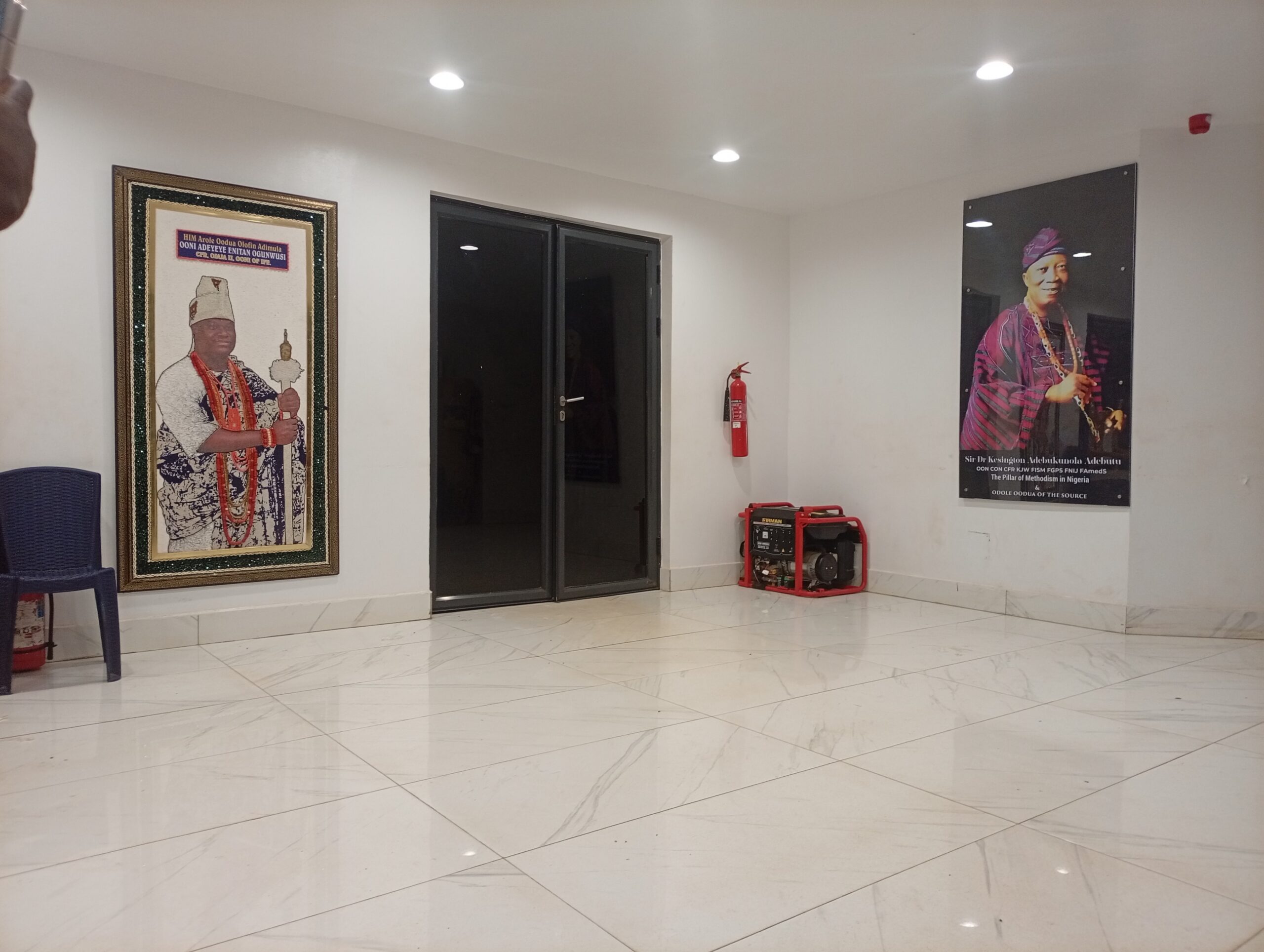
 ILE-IFE, Osun State — The Onirisa Palace, official seat of the Ooni of Ife and known formally as _Ile Oodua_, is more than architecture. It is a working institution where spirituality, kingship, and Yoruba identity converge daily.
Built in the 18th century in Enuwa, the palace complex houses the Arole Oodua, currently Oba Adeyeye Enitan Ogunwusi, Ojaja II, who ascended the throne in December 2015. Ile-Ife is widely regarded as the cradle of the Yoruba people, and the palace grounds reflect that legacy in stone, bronze, and ritual.
A Living Museum of 401 Deities
Ile-Ife is home to 401 deities, and many of the most significant shrines sit inside the palace walls. Accessible sites include Ogun Laadin, the temple of the god of iron where oaths are sworn; Yeyemoolu, a sacred well tied to fertility and the spirit-wife of successive Oonis; and Orikii, which draws traditionalists from across Yorubaland. Access to shrines is tiered, and some remain restricted to initiates only.
Court Structure and Protocol
The palace operates through three courts: the Emese Court of royal guards, the Council of Elders Court, and the Supreme Court presided over by the Ooni. Palace aides are recognizable by their half-shaved heads. Each morning, the _Ijala Ooni_ praise singer and palace drummers perform the ritual awakening of the monarch.
Culture on Display
Visitors encounter a blend of old and new: ancient courtyards and sacred groves sit beside modern administrative buildings. A palace museum preserves ceremonial crowns, beaded regalia, and artifacts of past Oonis. Outside the gates stands Opa Oranmiyan, the towering monolith marking the grave of Oduduwa’s warrior son.
More Than Tourism
For the Ooni, the palace is evidence that “Ile-Ife history is deeper than what is available in academic institutions”. It hosts festivals nearly every day of the year and remains central to Yoruba cultural diplomacy.
To enter is to understand why the Alawe of Ilawe-Ekiti calls Ile-Ife “the foundation of all the earth”. Here, tradition is not curated. It governs.
Kábíyèsí o. Kí adé pẹ́ lórí, kí bàtà pẹ́ lẹ́sẹ̀.
-Chief Abiodun Lasile DL MnbR
Orunto Baalufe Owu Kingdom Abeokuta

