

The Owu people are one of the four principal sub-groups that constitute the Egba Confederacy in Abeokuta, alongside Ake (Egba Alake), Gbagura, and Oke-Ona.
 The history of Abeokuta and the formation of the Egba Confederacy cannot be properly discussed without a clear understanding of the place of the Owu people within the collective structure of Egbaland. The Owu are not accidental settlers, political appendages, or an ordinary quarter within Abeokuta. They are one of the original and principal components that collectively shaped the identity, growth, defence, and civilisation of the Egba Confederacy.
Historically, the Egba Confederacy emerged in the nineteenth century as a strategic alliance of related Yoruba sub-groups who came together for survival, stability, military protection, and socio-political development during a period of wars, migrations, and upheavals that affected many Yoruba kingdoms. Within this confederate arrangement stood four major divisions: Ake, Gbagura, Oke-Ona, and Owu. Each retained its historical identity, traditional institutions, and rulership system while contributing to the collective destiny of Abeokuta.
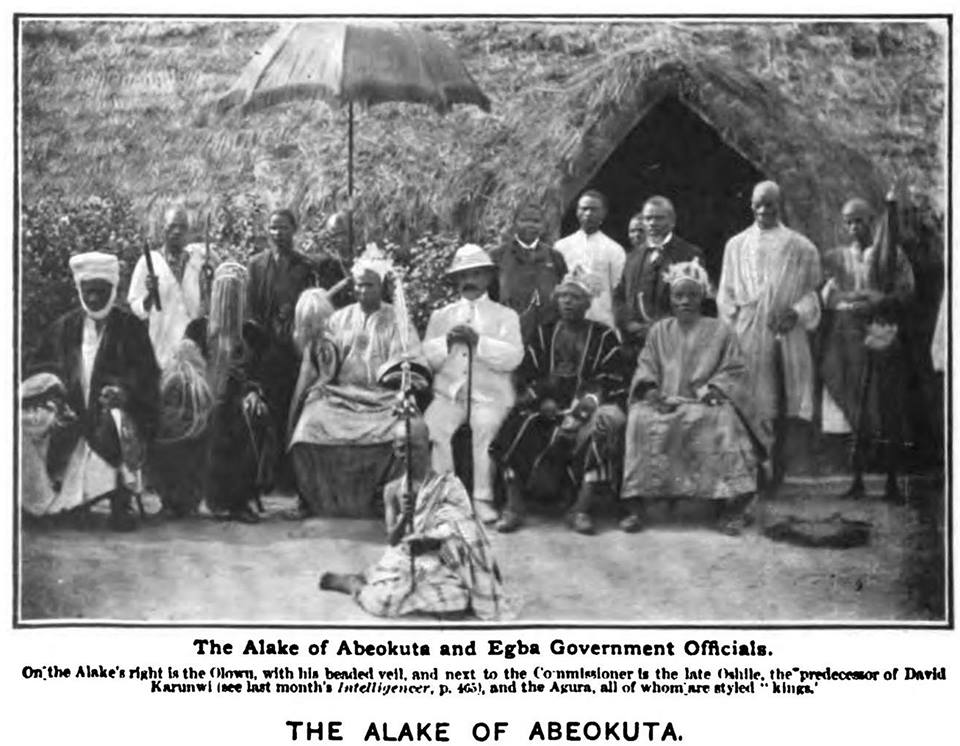
These four divisions are traditionally represented by their respective monarchs: the Alake of Egbaland representing Ake, the Agura representing Gbagura, the Osile representing Oke-Ona, and the Olowu representing Owu.
This arrangement reflects not merely a political structure but a recognition of distinct historical roots, ancestral heritage, and cultural sovereignty within a united confederate framework. The Owu therefore occupy a constitutional and historical position within the Egba system that is both respected and foundational.
The Owu people themselves possess one of the oldest and most distinguished histories in Yorubaland. Before their migration and eventual settlement in Abeokuta, the Owu had long established a powerful kingdom known for military strength, commerce, administration, and cultural advancement. Old Owu was a notable Yoruba kingdom whose influence extended across surrounding regions before the devastating wars that led to its destruction in the early nineteenth century.
The collapse of Old Owu did not destroy the identity of the Owu people. Rather, it scattered a resilient people whose determination preserved their ancestry, traditions, and royal heritage. Like many Yoruba groups affected by the instability of the era, the Owu migrated and later became integrated into the evolving settlement that became Abeokuta under the protective shelter of Olumo and the surrounding rock formations.
Even within this new environment, the Owu never lost their identity. They retained their monarchy under the Olowu, preserved their customs and chieftaincy systems, sustained their ancestral lineages, and continued their cultural expressions as a proud Yoruba kingdom within the confederate union. This continuity is one of the strongest proofs that Owu identity predates Abeokuta itself and was not created by it.
It is therefore historically inaccurate to reduce the Owu people to merely a district or subordinate extension of Abeokuta. Such interpretations ignore the depth of Yoruba history and the constitutional reality of the Egba Confederacy. Owu is a historically rooted Yoruba kingdom and civilisation that became one of the pillars upon which modern Abeokuta was built.
The contributions of the Owu people to the political, cultural, intellectual, and economic development of Abeokuta and Egbaland remain enormous. Across generations, Owu sons and daughters have distinguished themselves in leadership, scholarship, military service, business, media, traditional administration, religion, and public service. Their influence has consistently extended beyond Egbaland into national and international relevance.
Equally important is the preservation of Owu cultural consciousness within the broader Yoruba heritage. Festivals, traditional rites, royal institutions, oral history, praise poetry, and ancestral values continue to define the identity of the Owu people. The Olowu stool remains a symbol of continuity, authority, and the enduring dignity of the Owu kingdom.
The Egba Confederacy itself stands as a remarkable example of unity without the destruction of identity. The strength of Abeokuta came not from forced uniformity but from the cooperation of historically distinct peoples who understood the importance of collective survival and shared progress. In that arrangement, Owu occupies an honoured and inseparable place.
Therefore, when discussing the history of Abeokuta, Egbaland, or Yoruba civilisation generally, it must always be remembered that the Owu are not strangers within the Egba Confederacy. They are one of its principal foundations — a people with deep ancestral roots, preserved sovereignty, enduring traditions, and undeniable historical significance.
The story of the Owu people is ultimately a story of resilience, continuity, dignity, and identity. From the rise of Old Owu to the establishment of Owu presence within Abeokuta, the people have maintained an unbroken cultural consciousness that continues to command respect within Yorubaland and beyond.
— Chief Abiodun Lasile DL MnbR
Orunto Baalufe Owu Kingdom Abeokuta

