

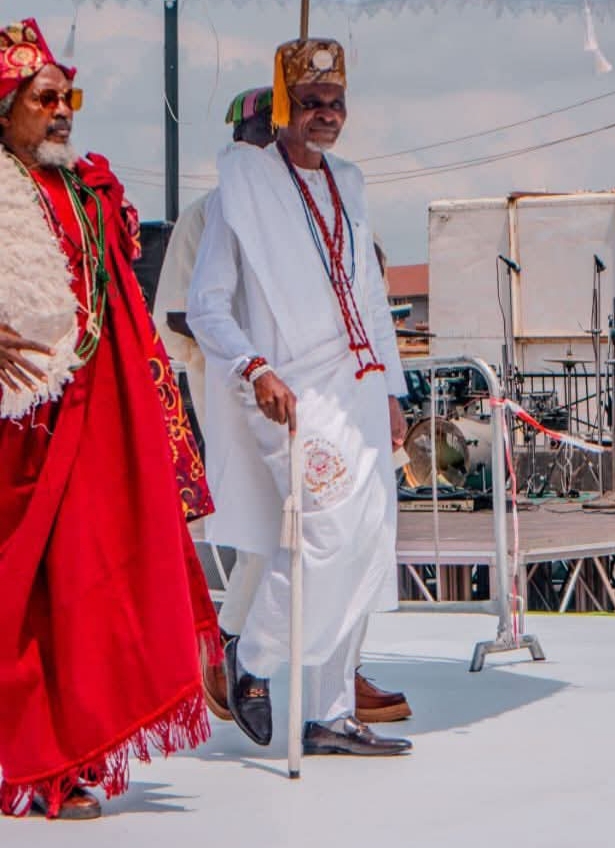
According to the cherished oral traditions of Owu and the broader Yoruba historical heritage, Odùduwà, the revered progenitor and unifying ancestor of the Yoruba people, established Ajíbọ̀sìn as the first Olowu following the founding of the Owu Kingdom. This tradition forms one of the enduring pillars of Owu identity, preserving the sacred link between the royal institution of Owu and the earliest era of Yoruba civilisation.
Like much of early Yoruba history, this account has been faithfully transmitted through generations by oral tradition rather than written records. Consequently, no precise calendar date can be assigned to the installation of Ajíbọ̀sìn. However, the convergence of oral traditions with historical and archaeological scholarship places this formative period of Yoruba state formation between the 10th and 12th centuries CE.
For the Owu people, the enthronement of Ajíbọ̀sìn was more than the appointment of a ruler; it represented the establishment of an enduring monarchy founded on legitimacy, custom, courage, and the shared values of the Yoruba nation. The Olowu stool has since remained a symbol of continuity, resilience, and the rich cultural heritage that has distinguished Owu through the centuries.
While historical scholarship continues to examine the chronology of early Yoruba kingdoms, the Owu tradition remains steadfast in affirming that Ajíbọ̀sìn was the first Olowu, installed by Odùduwà himself at the dawn of the Owu Kingdom—a legacy that continues to inspire pride among the descendants of Owu today.
Owu Kingdom, the first and legitimate by the progenitor.
-Chief Abiodun Lasile, DL, MnbR
Orunto Baalufe, Owu Kingdom, Abeokuta

