

There was a time when the palace was the first parliament of the people. Before the emergence of modern political institutions, the palace served as the centre of governance, justice, security, diplomacy, economic planning, conflict resolution, and cultural preservation. The traditional ruler was not merely a ceremonial figure; he was the custodian of the people’s welfare, the conscience of the community, and the bridge between the past and the future.
Today, however, many traditional stools have been reduced to symbolic institutions with limited constitutional authority. Yet the challenges confronting our nation—rural insecurity, youth unemployment, declining moral values, environmental degradation, communal conflicts, drug abuse, and weakening family structures—are precisely the areas where traditional institutions possess unmatched influence.
This raises an important question: Are we fully harnessing the power of our traditional stools in national development? The answer is clearly no.
The palace remains the closest institution to the grassroots. Government officials may change after elections, but the palace remains a permanent institution. Traditional rulers understand the history of their people, know the families, appreciate local dynamics, and command moral authority that cannot be legislated.
The Yoruba have long understood this truth. Our elders say:
“Igi gogoro máa wó lójú ọ̀nà, àgbà tó rí i ni yóò kọ́kọ́ ké.”
When a mighty tree is about to fall across the road, it is the elder who first notices and raises the alarm.
Traditional rulers are those elders. They often detect social problems before they become national crises.
Imagine a governance system where every local government actively partners with traditional rulers on community security, environmental sanitation, youth mentorship, agricultural development, educational campaigns, healthcare awareness, and investment promotion. The results would be transformative.
Traditional rulers are not competitors to elected governments. Rather, they are strategic partners whose influence reaches where government bureaucracy often cannot.
The palace can become a policy laboratory.
For instance, campaigns against drug abuse become more effective when supported by respected monarchs and chiefs. Community policing succeeds better when local intelligence flows through trusted traditional structures. Land disputes are often resolved faster through customary mediation than prolonged litigation. Even vaccination drives, census exercises, voter education, and environmental campaigns gain wider acceptance when endorsed by traditional authorities.
One of the greatest strengths of traditional institutions is trust. Trust cannot be manufactured overnight; it is built across generations.
Another untapped asset is cultural diplomacy. Our festivals, arts, language, traditional architecture, crafts, cuisine, and historical sites represent enormous opportunities for tourism and economic development. Palaces should not merely preserve culture—they should become engines of cultural enterprise and local economic growth.
Equally important is the role of traditional rulers in preserving values.
Across many African societies, respect, integrity, honesty, communal responsibility, and compassion were cultivated through the traditional institution. Today, as society grapples with declining values, the palace still possesses the credibility to inspire moral rebirth.
Yet traditional institutions must also evolve.
The modern palace should embrace technology, documentation, research, digital archives, youth engagement, strategic communication, and evidence-based advocacy. Tradition must not become stagnant. As our forebears wisely demonstrated, culture survives not by resisting change but by guiding it.
Traditional rulers should increasingly participate in policy conversations—not partisan politics, but policy development. Their voices should be heard in discussions on education, agriculture, security, climate resilience, urban planning, healthcare, tourism, and social development.
Government, too, has responsibilities. Traditional councils should receive greater institutional support, capacity building, and clearly defined advisory roles. Consultation with traditional rulers should become a deliberate component of policymaking, particularly on matters affecting local communities.
The palace is not an outdated relic. It is a living institution.
As the Yoruba remind us:
“Ilé la ti ń kọ́ ẹ̀ṣọ́ r’òde.”
Charity and strength begin at home.
National development begins with strong communities, and strong communities are sustained by respected institutions.
From palace to policy is not merely a slogan. It is a pathway towards inclusive governance, sustainable development, and lasting peace.
If Nigeria must truly unlock her enormous potential, she must rediscover one of her oldest strengths—the wisdom, legitimacy, and community influence of her traditional stools.
The future of governance will not be built by government alone. It will be built when modern institutions and traditional institutions walk together in mutual respect, shared responsibility, and a common vision for national progress.
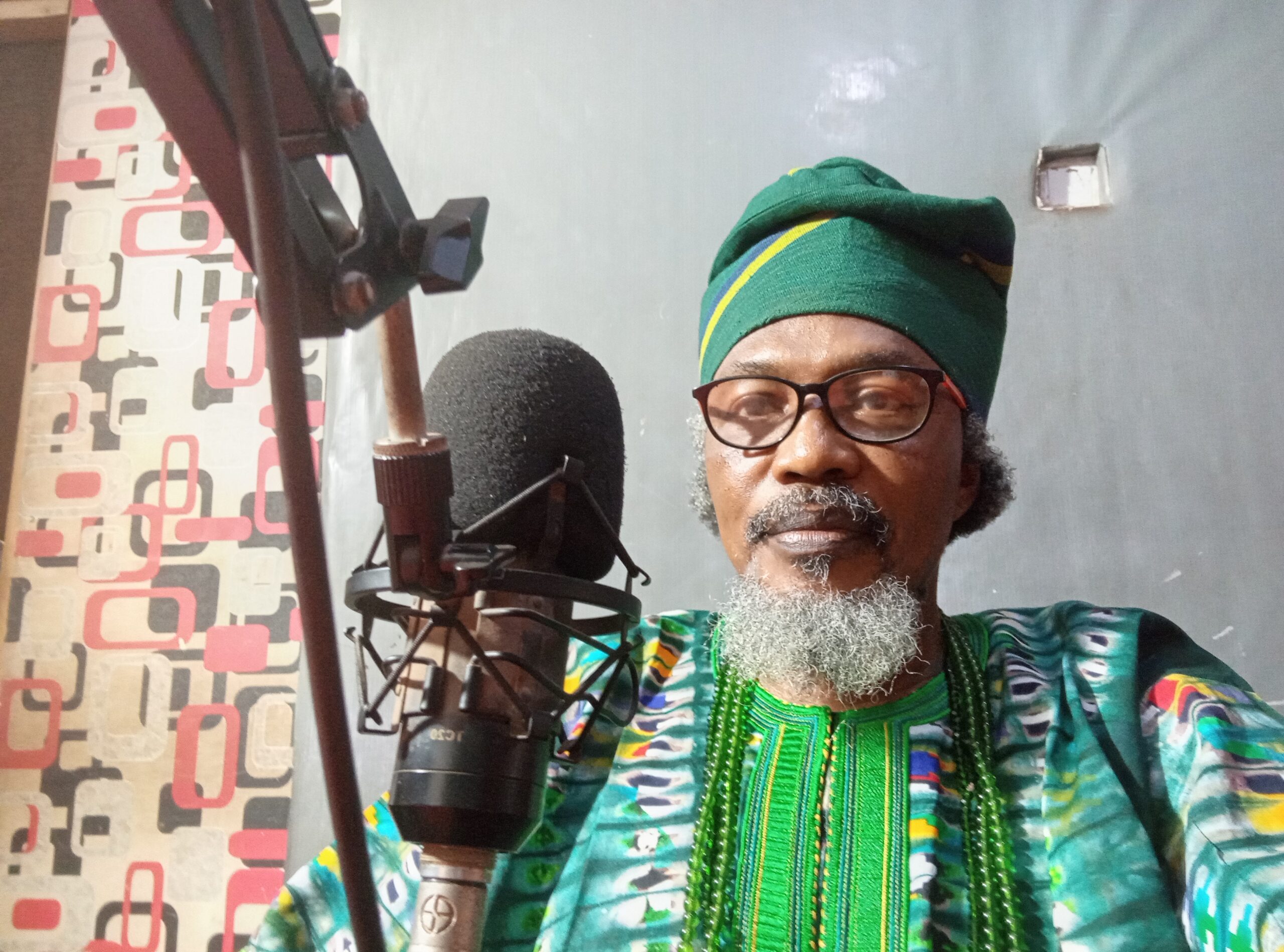
As discussed on Ayekoto, a yoruba radio programme on Sweet FM 107.1 Abeokuta.

