

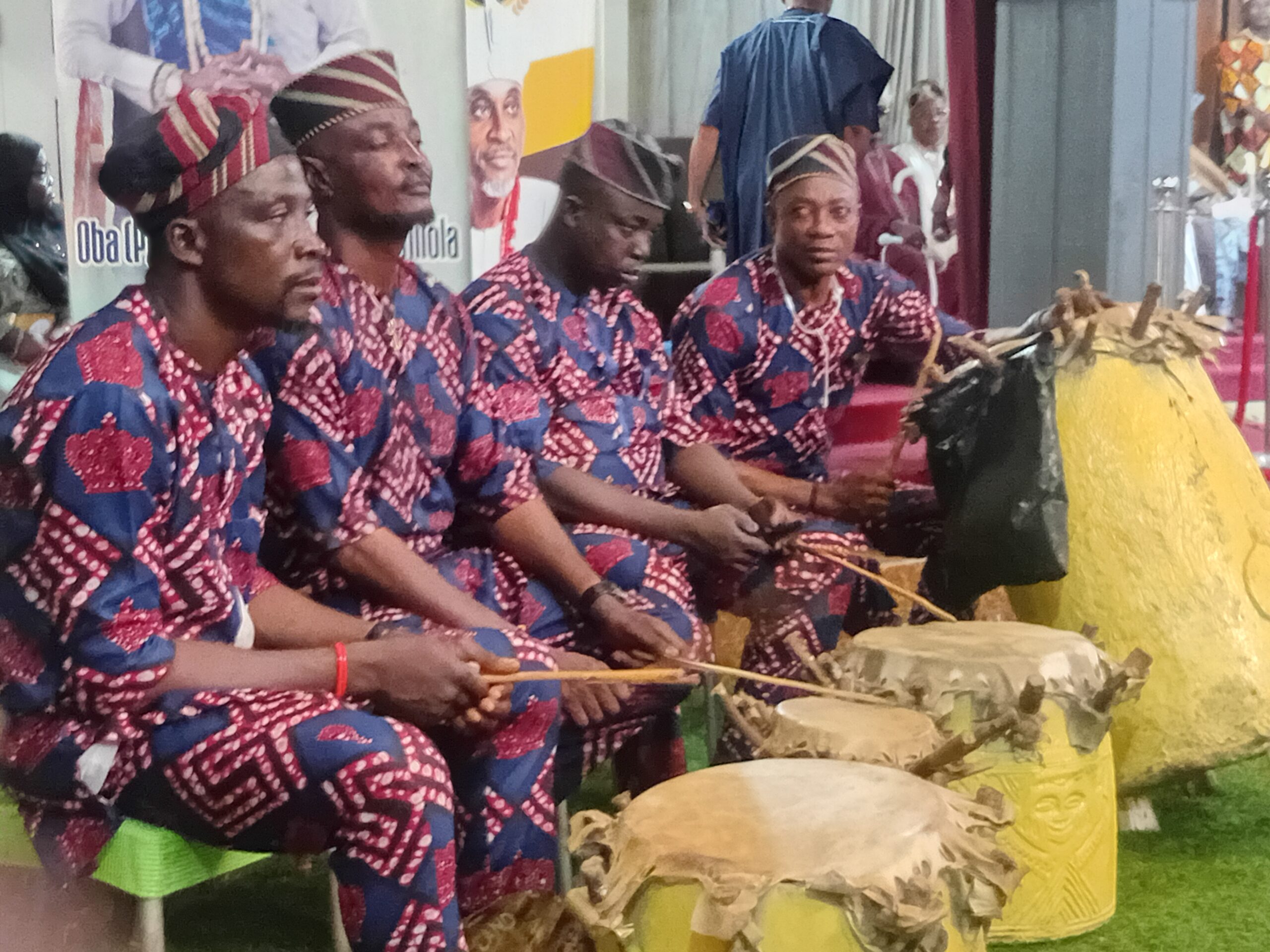
In African traditional societies, particularly among the Yoruba, the drum is far more than a musical instrument. It is a language, a herald, a historian, and a sacred medium through which culture speaks. During chieftaincy ceremonies, drums announce honour, proclaim lineage, preserve history, and direct the movement of both the titled and the untitled. To understand a traditional ceremony without understanding its drums is to hear the sound but miss the message.
Every chieftaincy title carries its own identity, and that identity is reflected in its drumming. Skilled drummers know the praise names (oríkì) of families, lineages, towns, and chiefs. Through rhythmic patterns and talking drums, they recount ancestral achievements, victories, virtues, and responsibilities. The drum reminds a chief that a title is not merely a privilege but a covenant with history.
Dance in a chieftaincy ceremony is therefore not entertainment alone. It is a visible response to the drum’s message. Every dignified step acknowledges ancestry, honours the throne, and affirms the legitimacy of the occasion. The chief does not simply dance because music is playing; he dances because the drum has called him into communion with his forebears and with the people he has sworn to serve.
Among the Yoruba, different drums carry different responsibilities. The Dùndún speaks in tonal language, echoing praise poetry and royal greetings. The Bàtá possesses deep spiritual significance and commands reverence through its complex rhythms. The Gángan, the talking drum, imitates human speech, delivering messages that only trained ears fully comprehend. The Ìgbìn is associated with sacred rites and ancient traditions, while other ensembles mark celebration, procession, or solemnity. Each drum has its place, its voice, and its protocol.
A knowledgeable dancer listens before moving. The rhythm determines posture, pace, and expression. A royal dance is measured and restrained, reflecting dignity rather than exuberance. An elder’s dance demonstrates wisdom and composure. A warrior’s dance conveys courage and readiness. Thus, dance becomes a language of character, while the drum becomes its interpreter.
The relationship between the drummer and the chief is one of mutual respect. The drummer must understand palace etiquette, genealogy, and ceremonial protocol. He knows when to praise, when to pause, and when silence itself is the greatest honour. Likewise, the chief recognises the drummer as a custodian of memory, for many family histories survive not in books but in the rhythmic language preserved across generations.
The timing of drumming is equally significant. The drum announces arrivals, accompanies processions, welcomes distinguished guests, signals moments of homage, and celebrates the conferment of titles. It distinguishes one phase of the ceremony from another, ensuring that every action unfolds in harmony with tradition.
Sadly, modern ceremonies sometimes reduce drumming to mere entertainment, encouraging excessive display and competitive dancing. Such practices risk diminishing the sacred dignity of traditional institutions. When dance becomes a contest for attention rather than an expression of honour, the cultural philosophy behind the ceremony is weakened.
Our forebears understood that the drum educates as much as it entertains. It teaches history, reinforces values, celebrates integrity, and reminds every chief that leadership is rooted in service, humility, courage, and accountability. The rhythm of the drum is, in many respects, the heartbeat of the community itself.
As a Yoruba proverb reminds us: “Bí ìlù bá dákẹ́, ìjó á dáwọ́ dúró.” — “When the drum falls silent, the dance comes to an end.” This saying extends beyond music. When culture loses its voice, identity begins to fade. The preservation of traditional drumming is therefore the preservation of memory, authority, and civilisation.
Every beat of the drum carries the footsteps of our ancestors. Every dignified dance pays homage to those who came before us. Every chieftaincy ceremony should remind us that culture is not inherited by chance; it is preserved through understanding, discipline, and reverence.
-Chief Abiodun Lasile DL MnbR
Orunto Baalufe Owu Kingdom Abeokuta

