

Three years is a measure of time. Three years like a decade is a measure of what has been accomplished within that time.
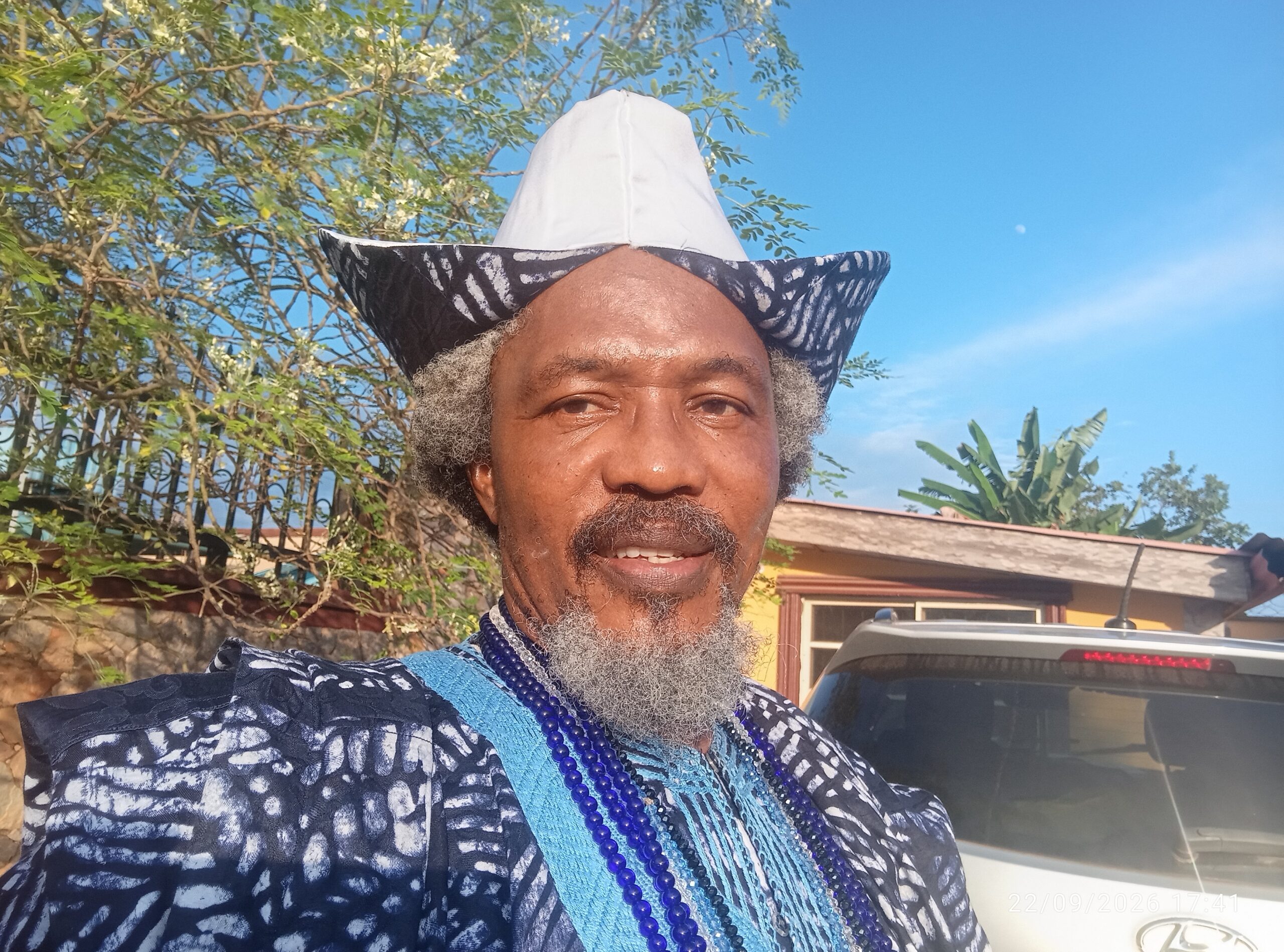
On 22 September 2026, I mark three years since my installation as Orunto Baalufe of Owu Kingdom, Abeokuta. I do so with gratitude, humility and a clear consciousness of the responsibility attached to the office.
These three years have not been years of sitting on a title.
They have been years of service, documentation, advocacy, cultural representation, preservation, institution-building and intellectual engagement.My understanding of the Orunto office has been simple:
Traditional leadership is not traditional decoration. It is traditional responsibility.
A RECORD OF CULTURAL DOCUMENTATION
One of the most visible dimensions of my service has been the deliberate documentation, protection, promotion and preservation of Owu history, tradition, institutions and cultural identity.
In these three years, I have written over 500 articles devoted to the protection, promotion and preservation of culture and traditions. These writings have covered Owu heritage, traditional institutions, historical memory, indigenous values, cultural practices, personalities, communities and the responsibilities of those entrusted with cultural heritage.
For me, writing is not merely expression.
It is cultural preservation.
Every article becomes another piece of documentation against cultural amnesia.
What is not documented can be forgotten. What is poorly documented can be distorted. What is deliberately preserved can become a reference for generations yet unborn.
REPRESENTING THE OWU CULTURE
My service has also involved the active representation of Owu culture and traditional identity.
I have had the privilege of representing the culture through His Royal Majesty, Oba Prof. Saka Adelola Matemilola, FNSE, Otileta VII, Olowu Oluyalo of Owu Kingdom, Abeokuta, carrying the dignity and identity of the Owu institution into public engagements.
Representation, to me, is not merely appearing at an event.
It is understanding what one represents.
Wherever I have represented the Owu institution, I have consciously carried our identity with dignity, ensuring that our cultural presence is not hidden behind modernity but proudly expressed through it.
CULTURE THAT CAN BE SEEN
I have also made traditional dress and indigenous fabrics a visible part of my cultural advocacy.
I have consistently represented our heritage through traditional attire and fabrics, not occasionally for ceremony, but as an intentional expression of cultural identity.
The response has been encouraging.
The admiration of people wherever I appear in our traditional dresses and fabrics demonstrates that culture does not have to be forced upon people before it can be appreciated.
Sometimes, culture needs only to be confidently worn before it can be admired.
For me, the traditional attire is more than clothing.
It is cultural communication.
It is identity in visibility.
It is heritage in motion.
CULTURAL INTELLIGENCE AS A LEGACY PROJECT
These experiences have strengthened a wider intellectual project: Cultural Intelligence.
I have advanced the proposition that intelligence must go beyond technology, academic knowledge and economic sophistication. A people must also possess the intelligence to understand their identity, ancestry, values, traditions and obligations to the future.
This has developed into the publication project:
“Cultural Intelligence: The Missing Intelligence in the Age of Intelligence.”
The central question is simple:
How do we become modern without becoming culturally lost?
That question is particularly important in an age where technology is advancing faster than cultural consciousness.
READING, CHILDREN AND THE FUTURE
My service has not been confined to traditional institutions.
Through The SixthSense Initiative and Sixth Sense Series Publications, I have continued a long-standing commitment to children’s reading culture and human capacity development.
The Reading Culture Magazine has reached thousands of children and young people through free distribution. The Summer Children Reading Camp has provided structured reading, learning and character-development experiences for children aged 8–15. The SixthSense Children Reading Competition Programme, in partnership with the Olusegun Obasanjo Presidential Library, has created opportunities for pupils and students across schools in the South-West.
This is connected to traditional leadership because the preservation of culture is ultimately about the people who will inherit it.
LEADERSHIP THROUGH COMMUNITY DEVELOPMENT
I have also continued to support the principle that leadership must reach beyond words.
My involvement in community-oriented initiatives, including sanitation, youth development, literacy, capacity building and responsible corporate social intervention, reflects a conviction that:
Development becomes meaningful when it reaches the people who need it most.
USING PUBLIC VOICE FOR PUBLIC GOOD
My traditional role has not silenced my public voice.
I have continued to participate in public discourse through writing, broadcasting, cultural advocacy and civic commentary. Whether discussing governance, corruption, insecurity, human rights, culture, education or community development, the objective has remained consistent:
to speak where silence would surrender responsibility.
Leadership sometimes requires diplomacy.
At other times, it requires courage.
THREE YEARS OF SERVICE, NOT THREE YEARS OF TITLE
The greatest measure of these three years is therefore not the title Orunto Baalufe itself.
The title was given.
The responsibility was accepted.
The work had to be done.
More than 500 cultural articles, sustained documentation of Owu heritage, active representation of the Owu institution, visible promotion of traditional attire and indigenous fabrics, advocacy for Cultural Intelligence, children’s literacy initiatives, community development and public engagement constitute a body of work that cannot be adequately represented by the number three alone.
That is the meaning of “Three Years Like a Decade.”
It does not mean that three years are literally ten.
It means that three years have carried the work, responsibility and productivity of a much longer journey.
And yet, I do not regard these achievements as a conclusion.
They are a foundation.
There is more history to document, more culture to protect, more traditions to preserve, more children to inspire, more institutions to strengthen and more Cultural Intelligence to advance.
As I look back on these three years, my greatest satisfaction is not that I have occupied an office.
It is that I have tried to make the office meaningful.
For me, traditional leadership is not about being above the people.
It is about standing for something among the people.
Three years have passed.
The service continues.
THREE YEARS LIKE A DECADE.
Three years measured not merely by time, but by responsibility, service, achievement and legacy.
— Chief Abiodun Lasile DL MnbR
Orunto Baalufe, Owu Kingdom Abeokuta

