

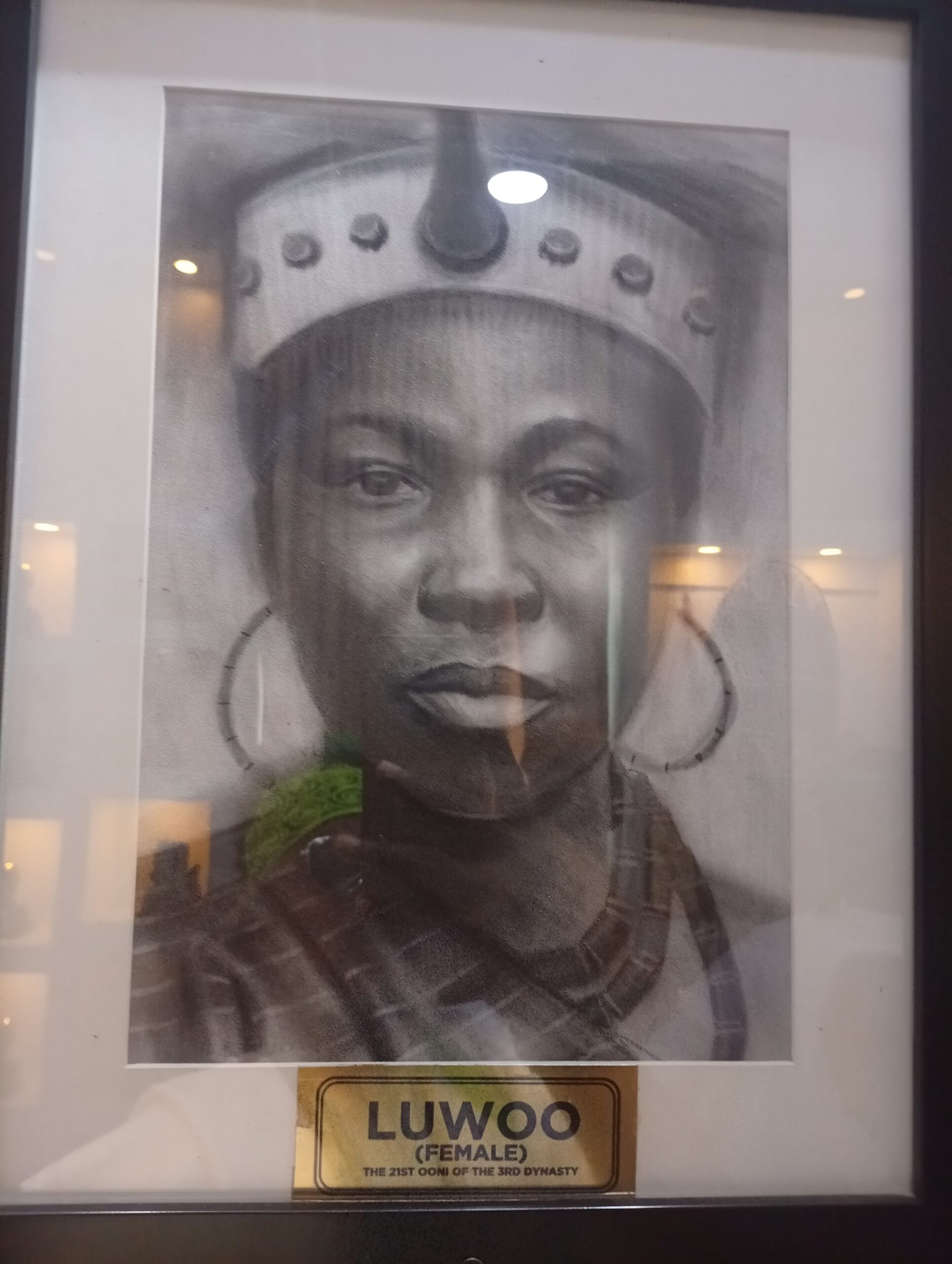
The story of Ooni Luwo Gbagida remains one of the most remarkable narratives in the political and cultural history of the Yoruba race. She is widely celebrated as the first and only female Ooni to have ascended the sacred throne of Ile-Ife, the spiritual cradle of the Yoruba people. Her reign, believed to have occurred between the 10th and 12th centuries, symbolised uncommon authority, administrative vision, and cultural sophistication.
 As the 21st Ooni of Ife, Luwo Gbagida was not merely a ceremonial monarch; she was a reformer and a leader remembered for discipline, courage, and developmental foresight. Oral traditions describe her as a ruler deeply committed to cleanliness and urban order. One of her most enduring legacies was the paving of streets within Ile-Ife using potsherds and shining quartz pebbles — an architectural and environmental innovation that distinguished ancient Ife as a refined urban civilisation long before modern city planning emerged elsewhere. Those ancient pavements remain historical evidence of the advanced organisational culture of old Ife.
Luwo Gbagida came from the respected Lafogido ruling lineage and was married to the Obaloran of Ilode, one of the influential chiefs within the Ife traditional hierarchy. Historical accounts and oral traditions portray her as a principled and commanding monarch whose authority inspired both reverence and caution among her subjects. Her reign demonstrated that leadership within Yoruba civilisation was historically tied not merely to gender, but to wisdom, strength, and capability.
One of the most significant aspects of her legacy is the historical connection between Iwo and Ile-Ife through her son, Adekola Telu. Tradition holds that Adekola Telu, also known simply as Telu, was the founder of Iwo town. This establishes a direct ancestral and cultural linkage between Iwo and the royal heritage of Ile-Ife.
The migration and establishment of Iwo by Telu reflects the wider Yoruba pattern of expansion from Ile-Ife, regarded as the ancestral source of many Yoruba kingdoms and settlements. Through this lineage, the people of Iwo maintain a symbolic and historical bond with the sacred throne of Ife. Thus, the story of Telu is not merely about migration; it is about the transmission of royal heritage, culture, governance, and Yoruba identity from the spiritual nucleus of Ife into other Yoruba territories.
The memory of Ooni Luwo Gbagida continues to stand as a profound reminder that African history contains powerful examples of female leadership, visionary governance, and civilisation-building. Her reign bridges royalty, urban development, cultural continuity, and the historical relationship between Ile-Ife and Iwo through the lineage of Adekola Telu.
-The SixthSense Initiative outreach

